Deyga Organics — Turning Abandoned Carts into Revenue
How a proactive design strategy for an internal tool led to a
22% increase in recovered sales and a 70% growth in project value.
My Role
Freelance Product Designer (UX/UI)
Client
Deyga Organics (via dev agency
Tools
Figma, Notion
Timeline
2 Weeks

Overview
The Silent Story of an Abandoned Cart
For a beloved e-commerce brand like Deyga Organics, every abandoned cart tells a story of a lost connection. These weren't just data points; they were potential customers who showed interest but hesitated at the final step. The sales team was trying to manually follow up, but their process was scattered across spreadsheets and notes, making it inefficient and difficult to track.
They needed a tool. The initial request was simple: "a list of abandoned carts." But I saw an opportunity to deliver something much more powerful.
Problem Statement:
Deyga's sales team lacked a centralized, efficient system to track, manage, and follow up on abandoned checkouts, resulting in significant lost revenue and an inability to measure the effectiveness of their recovery efforts.
Chapter 1:
Designing Beyond the Brief
My first step was to understand the people behind the process. I interviewed the stakeholders at the agency and the Deyga sales team to map out their existing manual workflow. What information did they need to turn a cold follow-up into a helpful conversation?
Key Insights from Stakeholders:
Speed is Everything: The faster they could contact a customer, the higher the chance of recovery.
Context is King: A sales agent needed to see the customer's cart, their history, and past contact attempts all in one place.
Scalability was a Blind Spot: The initial request didn't account for team growth. Who manages the users? How do you assign roles and permissions?
Measuring Success was Impossible: Without tracking, they had no idea if their calls were working or which agents were most effective.
This discovery phase led to a crucial turning point. A simple list wouldn't solve the real problem. I went back to the agency with a bigger vision.
The Pivot:
Instead of just a list, I proposed a multi-page Sales Recovery Platform. This included a dashboard, detailed order views, robust filtering, and crucially, a user management system. This wasn't just about fulfilling a request; it was about providing a future-proof solution.
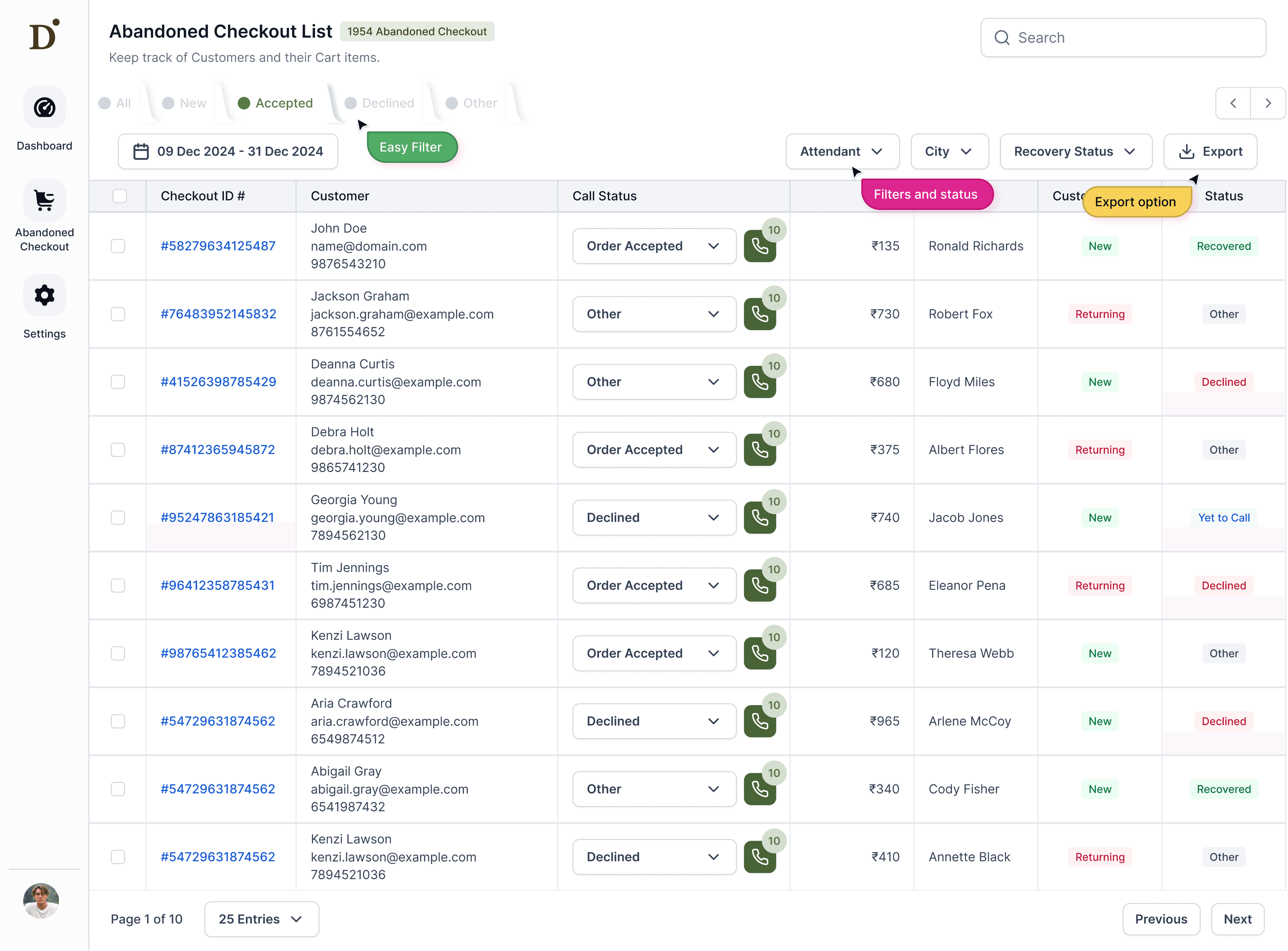
The central listing page was designed for at-a-glance efficiency, allowing the team to filter and prioritize their follow-ups instantly.
Chapter 2:
Crafting a High-Efficiency Workflow
The design was guided by one principle: empower the sales agent. Every element was crafted to reduce clicks, minimize cognitive load, and provide the right information at the right time.
The Agent's Cockpit
The order detail page was designed to be the agent's single source of truth. They could see customer details, the exact items in the cart, and a log of all previous activities. Most importantly, the "Actions" panel allowed them to send recovery links via WhatsApp or SMS with a single click, directly from the app.
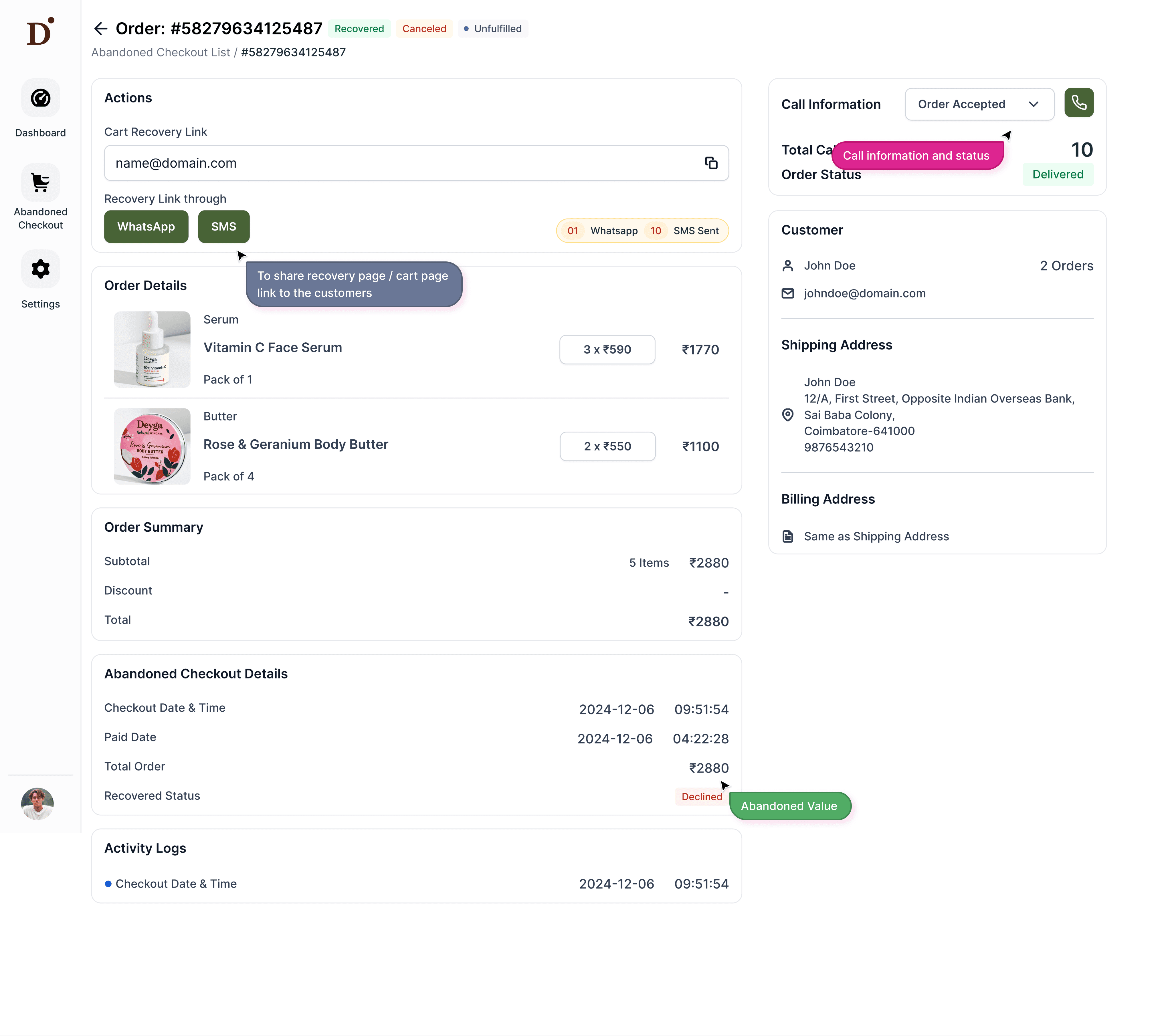
All critical information and actions are consolidated into one view, eliminating the need for agents to switch between different tools.
Building for Growth: User Management
My proposal to include user management was a game-changer. It allowed Deyga to create distinct roles for "Administrators" and "Staff," controlling permissions for sensitive actions. This foresight meant the tool could scale with the team without compromising security or organization.
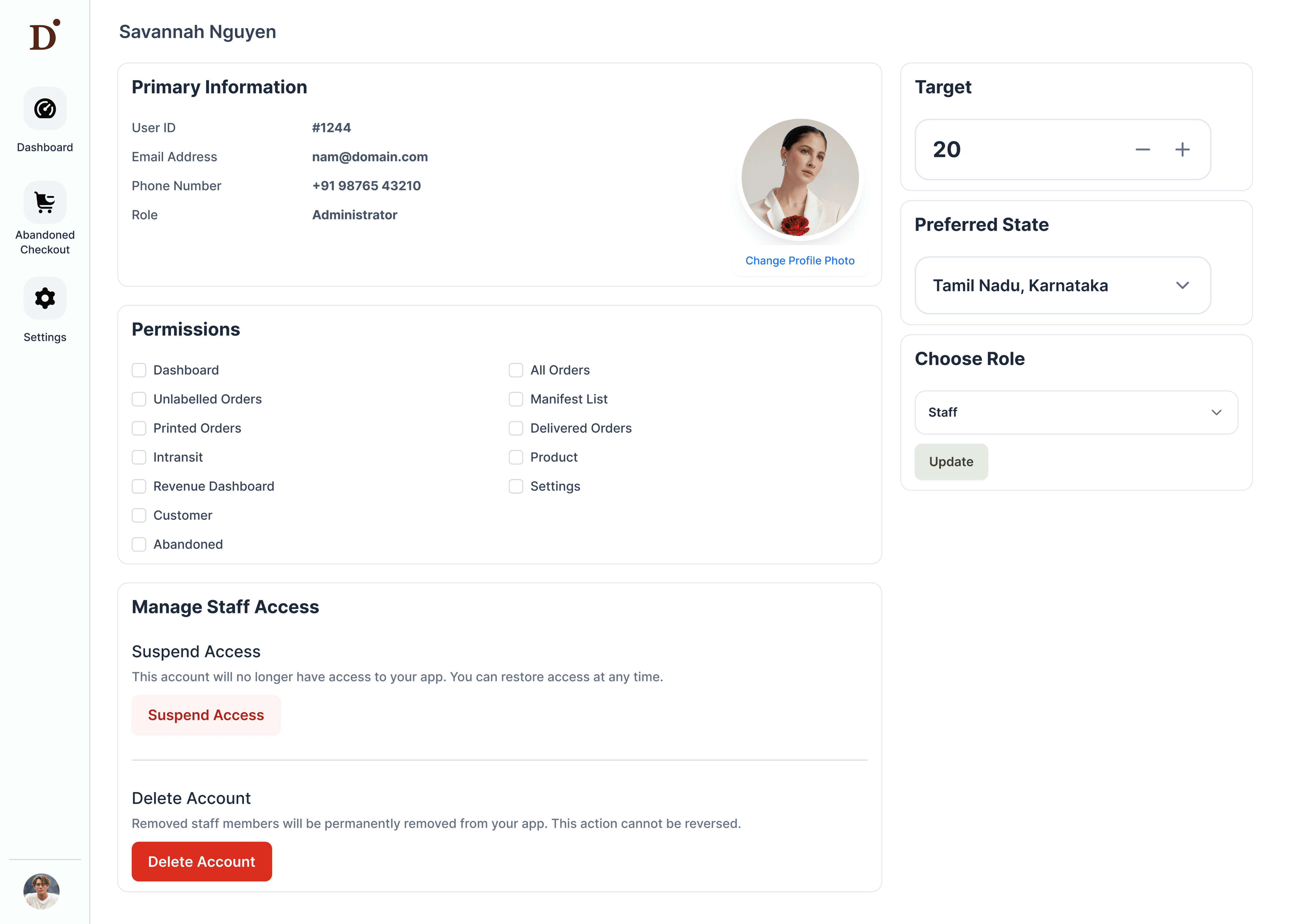
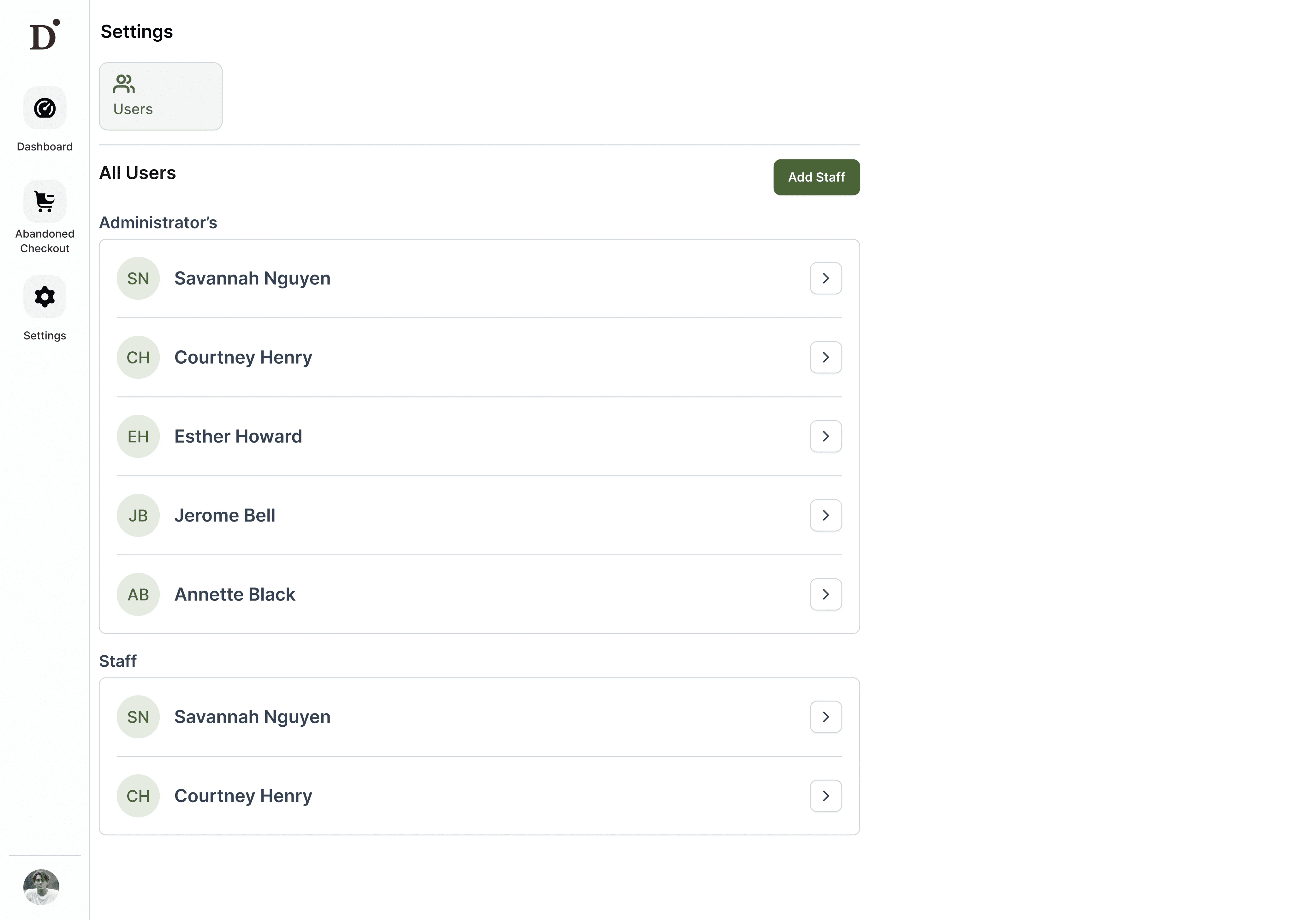
Proactively designing for scalability with a robust user and permissions system transformed the project from a simple tool into a true platform.
Chapter 3:
The Impact — More Than Just a Design
The platform was a resounding success, delivering measurable value for both Deyga Organics and the development agency that hired me.
Abandoned Cart Recovery Rate
22% Increase in Q1
Directly translated to a significant lift in Deyga's online revenue.
Agent Efficiency
40% Reduction in Time/Follow-up
Agents could handle more leads effectively, boosting team productivity.
Project Value Growth
+70%
My strategic design proposals expanded the project scope, resulting in a 70% increase in revenue for the development agency.
The ultimate proof of success? The client was thrilled. The tool became an indispensable part of their sales process.
My Reflections & Key Learnings
Product Thinking is a Superpower. As a designer, my greatest value wasn't just in the UI, but in understanding the business goals and pushing the vision further. By asking "what if?" and designing beyond the initial brief, I delivered exponentially more value.
Internal Tools Deserve Great UX. Often overlooked, internal tools are where the real work happens. Applying consumer-grade UX principles to this platform empowered the sales team and made their work more enjoyable and effective.
Communicate the "Why." Getting buy-in for a larger scope required clear communication. I presented my ideas not as "more features," but as solutions to the core problems of scalability and measurement that the client hadn't yet considered.
Stakeholder Feedback
"We brought Jai in to design a simple interface. We ended up with a full-fledged product strategy. Their ability to see the bigger picture and design for future needs was instrumental. Those insights not only made our client ecstatic but also directly increased our project's revenue by 70%. That's the difference between a designer and a design partner."
Agents could handle more leads effectively, boosting team productivity.